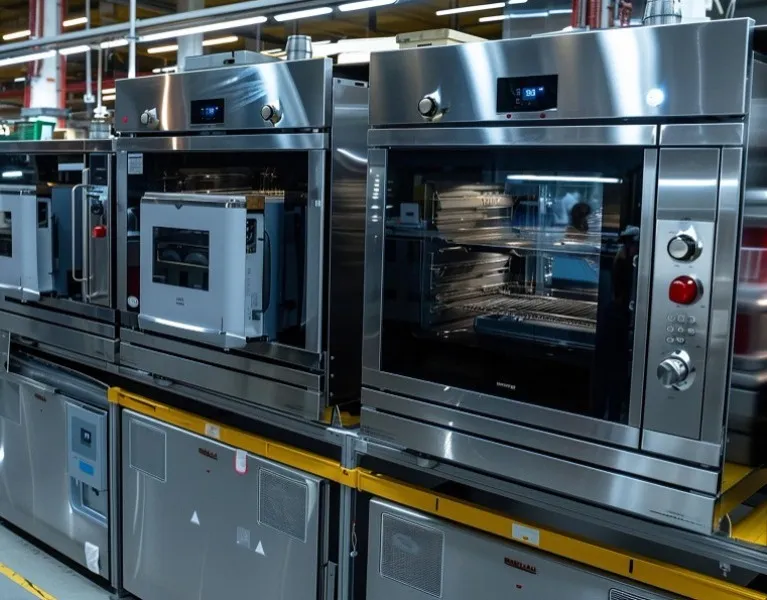
Cooking hundreds of portions requires a different approach from preparing individual restaurant orders. Canteens, hospitals, hostels, hotels, caterers and central kitchens need equipment capable of supporting repeated large-volume production while keeping workflow manageable.
Choosing an Electric Bulk Cooking Equipment Supplier is therefore an operational decision rather than simply a machinery purchase.
Signs Your Kitchen May Be Ready for Bulk Cooking Equipment
Manual processes can remain practical at lower volumes. Mechanisation becomes worth evaluating when production teams repeatedly encounter problems such as:
- Long preparation and cooking cycles
- Difficulty handling large vessels
- Inconsistent batches
- Excessive dependence on manual processes
- Congestion around conventional cooking stations
- Increasing meal volumes
These indicators suggest that existing equipment may no longer match production requirements.
Map Your Production Before Buying
Start by recording how many meals are prepared during each service period and which foods account for the highest volumes.
Rice, gravies, vegetables and other bulk preparations may require different cooking methods. Equipment should therefore be selected around the menu rather than a generic kitchen capacity figure.
For institutional and commercial kitchens in Nagpur, Maharashtra, peak meal periods are particularly relevant. A kitchen serving 500 meals over several hours has a different workflow from one that must prepare the same number within a narrow service window.
Infrastructure Matters
Electric bulk cooking equipment needs appropriate electrical planning.
Buyers should confirm load requirements, available connection type, kitchen layout, drainage where relevant and movement space around the equipment.
Installation planning should happen before delivery.
Evaluate the Supplier's Questions
A capable Electric Bulk Cooking Equipment Supplier should ask about production rather than immediately suggesting a machine.
Useful discussions normally cover:
- Food being prepared
- Batch quantity
- Meals per day
- Existing cooking method
- Available power
- Kitchen dimensions
- Cleaning process
- Expected operating hours
The quality of these questions can reveal whether the recommendation is being made around actual requirements.
Lipsa Impex provides commercial food-processing and electric cooking equipment to businesses in Nagpur. For organisations moving toward bulk production, equipment selection can be based on menu, capacity and infrastructure instead of treating all large kitchens alike.
A bulk cooking system should remove a genuine production constraint. When the kitchen has predictable high-volume demand, suitable electrical infrastructure and a clearly defined workflow, commercial electric equipment can become a practical next step in scaling food production.
Keywords