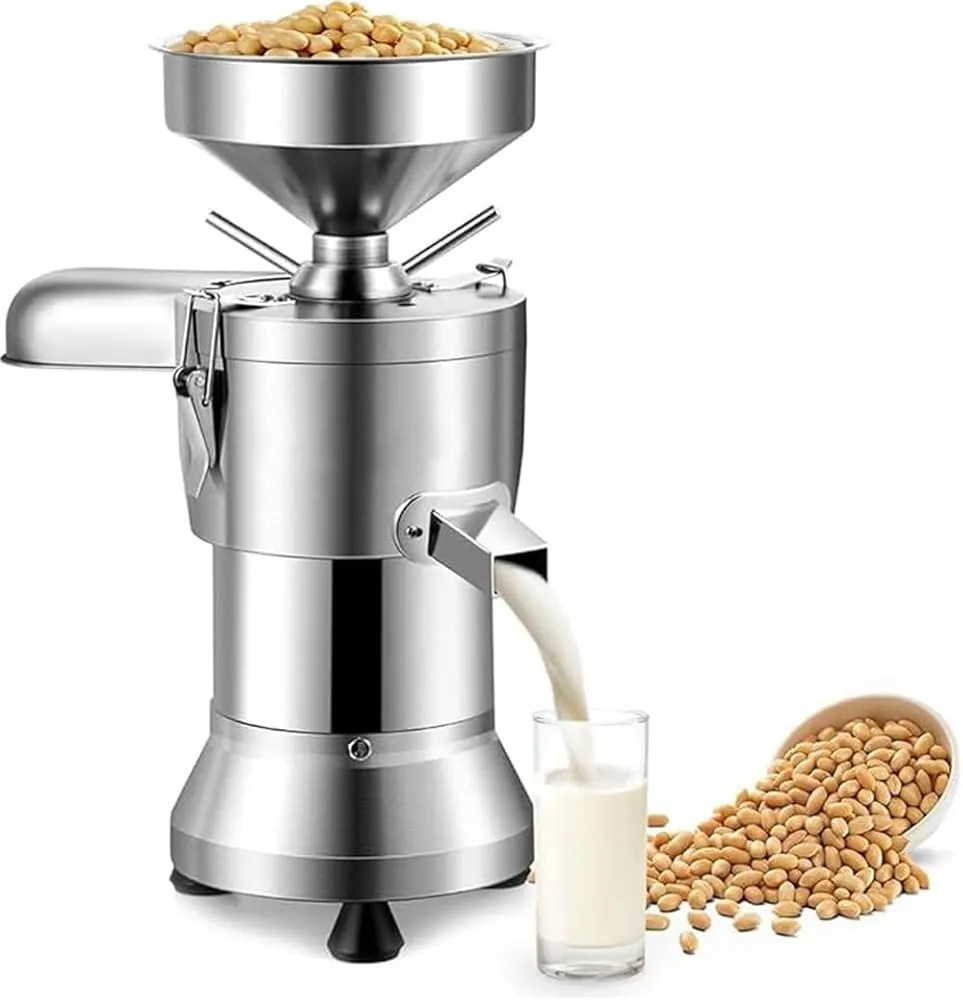
Producing soy milk commercially requires more than grinding soaked soybeans. Businesses need a process that can handle the expected quantity consistently while fitting into preparation, filtration, cooking and cleaning routines.
A Soyabean Milk Grinder can be useful for soy milk producers, beverage units, restaurants, health-food businesses and commercial kitchens processing soybean-based preparations.
Choosing the right machine begins with understanding the complete production process.
Calculate Your Required Output First
Machine capacity should reflect the quantity the business actually intends to process.
Estimate the amount of soaked soybean used per production cycle and expected daily output. Businesses planning future expansion can allow reasonable additional capacity, but significantly oversized equipment may occupy unnecessary space and increase investment.
Commercial food businesses in Nagpur, Maharashtra should also consider whether production is continuous or limited to specific batches during the day.
Check Food-Contact Construction
Soy products are processed with water, so hygiene and cleaning are important considerations.
Examine the areas that come into contact with the product. Buyers should understand how these parts are accessed and cleaned after production.
A practical evaluation should cover:
- Food-contact material
- Grinding mechanism
- Feed arrangement
- Collection method
- Cleaning access
- Motor specification
- Electrical requirements
The machine should be suitable for the intended food-processing environment rather than adapted from equipment designed for unrelated grinding applications.
Think About the Steps After Grinding
Grinding is only one part of soy milk production. Depending on the production method, subsequent stages can involve separation, filtration, cooking and flavouring.
A machine with high grinding output offers limited advantage if the next processing stage cannot handle that volume.
Businesses should therefore design production around balanced capacities. Matching grinding output with downstream processing can reduce waiting time and product accumulation between stages.
Ask About Operating and Maintenance Requirements
Before purchasing a Soyabean Milk Grinder, identify which components need routine inspection and how frequently maintenance is recommended.
Operators should also be trained to use the equipment within its intended capacity. Feeding material too quickly or using improperly prepared raw ingredients can affect processing efficiency.
Lipsa Impex serves commercial food-processing businesses looking for machinery in Nagpur and surrounding markets. Providing details about raw material quantity, desired production capacity and available electrical setup can make equipment discussions considerably more productive.
The right grinder should fit into the complete soy milk workflow rather than functioning as an isolated machine. Capacity, hygiene, ease of operation and compatibility with subsequent processing are the factors that ultimately determine whether the equipment supports efficient commercial production.
Keywords