A supplier should be judged by whether its equipment fits your menu, premises, utilities, staffing and service reality—not by catalogue price or headline capacity. By the end, you will have a practical way to define your requirements, compare written quotations, test technical claims and choose a supplier that can support the kitchen after delivery.
Key takeaways
- Map menu stages, volumes and service windows before requesting quotes.
- Compare installation, commissioning and after-sales responsibility—not just equipment prices.
- Check electrical load, gas, water, drainage and ventilation before ordering.
- Use acceptance tests and total-cost planning to protect the first year.
Define the Kitchen Before You Contact Suppliers
Turn menu planning into a production map before asking for prices. A supplier can quote accurately only when it knows what you will make, in what quantity, during which service window, and through which production stages.
1. List every menu item and record its recipe, serving size, preparation method, cooking time, holding requirement and cleaning interval. Group items that share equipment, such as a fryer, combi oven, planetary mixer or blast chiller.
2. Calculate daily portions and peak-hour output separately. State whether each figure means portions per batch, batches per hour or continuous output; a machine’s theoretical maximum can collapse when operators load wet, oversized or differently shaped products.
3. Map the production stages from receiving and storage through preparation, cooking, chilling, holding, service and washing. Mark bottlenecks, food-safety temperature checks and the equipment needed at each stage.
4. Give suppliers your site constraints with the brief: room dimensions, door widths, drainage, electrical phase and load, gas type and inlet pressure, water supply, altitude and delivery access.
Include the proposed exhaust route; grease-laden vapours can require a sized hood, fire suppression, makeup air, discharge clearance and equipment interlocks under requirements such as NFPA 96.
Ask each supplier to quote the same equipment schedule with model numbers, batch and continuous capacities, dimensions, utility loads, installation, commissioning and operator training. Require temperature-control equipment to support probe verification, calibration and records, not merely heating or cooling. That information exposes missing building work before a low equipment price becomes an expensive redesign.
Compare Suppliers on the Work They Take Responsibility For
A low catalogue price proves little. Compare delivered and installed cost with separate lines for equipment, freight, insurance, customs duties, brokerage, destination taxes, unloading, rigging, installation, commissioning, electrical or gas conversion, packaging disposal and building work. Incoterms allocate certain cost and risk; they do not settle product conformity, installation, warranty scope or every local charge.
| Capability | Machine-only seller | Accountable partner |
|---|---|---|
| Equipment selection and site survey | Recommends a model from the catalogue | Matches equipment selection to output, utilities and workflow, then measures the premises |
| Kitchen layout | Supplies dimensions only | Produces a kitchen layout showing clearances, service access and connection points |
| Installation and commissioning | Leaves placement to your contractor | Coordinates installation and commissioning, tests operation and records handover results |
| After-sales service | Sends a warranty document | Names technicians, holds parts locally and commits to a maximum response time |
Ask the supplier to state the warranty start date, parts-versus-labour coverage, travel limits, refrigerant and consumable exclusions, installation prerequisites, authorised-service rules and return freight. A shorter warranty with local technicians can protect production better than a longer promise with no response obligation.
Treat exhaust as building infrastructure. Confirm hood dimensions, fire suppression, makeup air, discharge and interlocks before ordering grease-producing equipment. Also check NSF/ANSI 2 sanitation requirements separately from electrical approval; in the United States, ask for an applicable UL, ETL or CSA mark from an OSHA-recognised NRTL.
For imported equipment entering the European Economic Area, request the declaration of conformity and supporting technical documentation, not merely a CE-logo photograph.
Use tested energy consumption only when the test method and equipment category match. Motor wattage alone will mislead your lifecycle comparison.
Test Capacity, Utilities and Site Fit Before You Order
Do not accept a catalogue capacity as proof that a machine suits your kitchen. Verify its output against your recipe, peak-hour schedule, available utilities and actual installation space before paying an advance.
1. Ask the supplier to label the quoted figure as continuous output, batch output or theoretical maximum. Request a demonstration using your product size, dough hydration, moisture level, portion weight and loading method; these variables can cut throughput sharply.
2. Convert the result into usable production. Record units per cycle, cycle time, recovery time, operator loading time and cleaning pauses, then compare the total with your required peak-hour volume.
3. Match the nameplate to your electrical supply. Check phase, amperage, breaker size, cable route, earthing and isolator requirements, especially when comparing 220 V versus 380 V equipment. A machine that overloads the circuit is not site-ready.
4. For gas equipment, obtain the exact gas type, inlet pressure, altitude rating, ventilation requirement and certification or listing. Natural-gas and propane models are not automatically interchangeable; conversion may require an approved kit and qualified technician.
5. Measure doorways, lift dimensions, ceiling height, floor loading, drainage and service clearances. Confirm that the hood, grease duct, fire suppression, makeup air, exhaust discharge and equipment interlocks meet the building approval requirements.
6. Test temperature-control equipment under loaded conditions. Specify 41°F (5°C) or below for cold holding and 135°F (57°C) or above for hot holding, then require probe access, calibration, alarms and recorded readings during commissioning.
Get the supplier to sign an acceptance test stating the measured output, utility readings, temperatures and any failed condition.
Demand a Comparable Quotation and a Verifiable Service Promise
A written quote must identify the exact model number, quantity, equipment price, GST treatment, freight, insurance, unloading, installation, commissioning, delivery date and payment schedule. Reject “as discussed” totals: you cannot compare suppliers or justify an advance when local charges are hidden.
| Cost item | Require in writing | Why it matters |
|---|---|---|
| Equipment | Make, model number, specifications and included accessories | Stops a cheaper substitute being delivered |
| Taxes and transport | Net price, GST, freight, insurance, customs, brokerage and destination charges | Reveals the delivered cost |
| Site work | Unloading, rigging, installation, electrical or gas conversion, packaging removal and building work | Prevents surprise commissioning bills |
| Trade terms | Named Incoterm, delivery point and transfer of risk | Defines transport responsibility, not warranty or conformity |
| Warranty terms | Start date, parts and labour coverage, exclusions, travel, refrigerant, consumables, return freight and maximum response time | Exposes the cost of a breakdown |
Ask for evidence behind the service promise: a stocked-parts list covering control boards, compressors, door gaskets, heating elements, probes, glass and filters; typical dispatch times; technician coverage in your area; and the point when parts become obsolete.
Lipsa Impex, for example, should be compared on whether it can document these support details for the specific machine, not on catalogue price alone.
For gas equipment, require the exact gas type, inlet pressure, altitude rating, ventilation requirements and certification. For imported equipment, request the declaration of conformity where applicable; a photograph of a CE logo proves nothing. Pay an advance only after the quote, exclusions, service contacts and cancellation terms are signed.
Related products
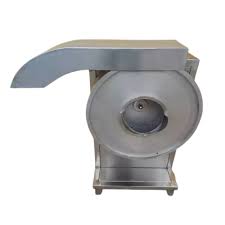 | 380 V Commercial French Fry Cutting Machine 380 V Commercial French Fry Cutting Machine Usage/Application Commercial Material Stainless Steel Type of Cutter French Fry Cutter Weight 110 Kg Voltage 380 V Capacity 600 Kg/h Product... View product → |
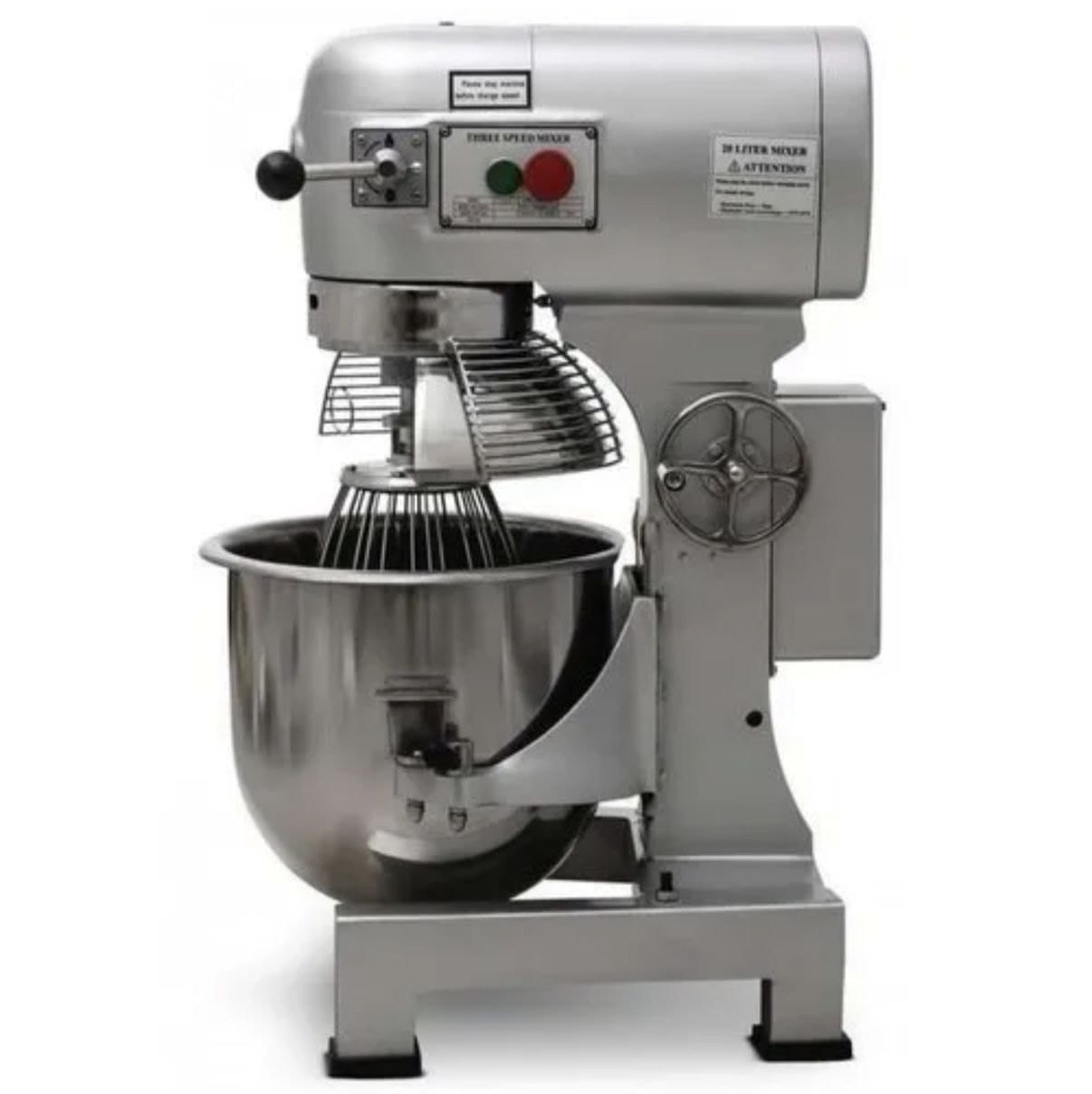 | PLANETARY MIXTURE ₹75000 High-Performance Industrial Planetary Mixers From boutique bakeries to high-volume production lines, our range of professional planetary mixers (10L... View product → |
Protect the First Year With Acceptance Tests and Total-Cost Planning
A kitchen is ready for production only after a witnessed trial using your recipes, batch sizes and peak-hour workflow. Put the results in a commissioning checklist and obtain written sign-off before releasing the final payment.
- Confirm every machine reaches its specified temperature, pressure, speed or output.
- Check product temperature with a calibrated probe, not only the equipment display.
- Inspect food-contact surfaces for smoothness, corrosion resistance, sealed joints and hygiene and cleanability.
- Run the hood, fire suppression, makeup air and equipment interlocks together.
- Record operator training, faults found, corrective actions and outstanding building work.
Compare the first-year total cost, not the catalogue price. Use the same scope for every supplier.
| Cost line | Confirm in quote | Add if excluded |
|---|---|---|
| Equipment | Model, quantity and accessories | Required fittings |
| Delivery | Freight, insurance and customs | Brokerage and destination taxes |
| Site work | Unloading, rigging and installation | Electrical or gas conversion |
| Handover | Commissioning and training | Packaging disposal and building work |
Treat Incoterms as a guide to transport risk and cost, not proof of installation, conformity or warranty coverage. For imported equipment, request the applicable declaration of conformity and technical file; a CE logo photograph proves little. Confirm whether local authorities or institutional buyers require NSF or another sanitation listing.
Reduce the warranty to writing: start date, parts and labour, travel, refrigerant, consumables, service response time, authorised technicians and return freight. A shorter warranty with local parts can outperform a longer promise. Price preventive maintenance, calibration and likely downtime before choosing.
Frequently asked questions
What should you define before contacting commercial kitchen equipment suppliers?
Document your menu, daily quantities, peak service window, production stages, batch sizes, storage needs and required output. This lets suppliers size equipment against your actual workflow.
How can you compare commercial kitchen suppliers fairly?
Ask each supplier to state what they handle, including layout, delivery, installation, commissioning, staff training, warranty claims and maintenance. Compare the responsibilities in writing rather than comparing equipment prices alone.
What site details must you check before ordering kitchen equipment?
Confirm equipment dimensions, access routes, electrical load, phase and voltage, gas supply, water pressure, drainage, ventilation, floor loading and clearance around service panels.
What should a commercial kitchen equipment quotation include?
Request model numbers, quantities, specifications, taxes, delivery, installation, commissioning, warranty duration, exclusions, lead times, payment stages and service-response commitments. Test each item against agreed output before final acceptance.
Related products
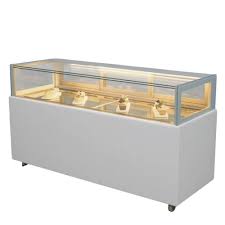 | 220 V Stainless Steal Commercial Display Refrigerator 220 V Stainless Steal Commercial Display Refrigerator Material Stainless Steel Usage/Application Commercial Color Grey Voltage 220 V Power 280 W Capacity 460 L Product Description: 460L storage ideal for... View product → |
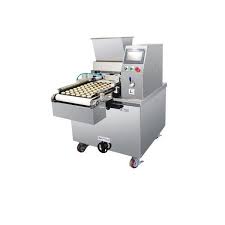 | 220 V Stainless Steel Electric Filled Cookies Machine 220 V Stainless Steel Electric Filled Cookies Machine Production Capacity 400 kg/hr Power Source Electric Usage/Application Commercial Material Stainless Steel Automatic Grade Automatic Weight 280 Kg... View product → |
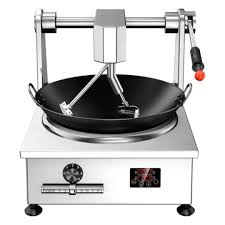 | 100 L Stainless Steel Cooking Machine 100 L Stainless Steel Cooking Machine Capacity 100 L Material Stainless Steel Weight 30 Kg Power 5000 W Voltage 220 V Usage/Application Food Processing Product Description: Large 100L... View product → |
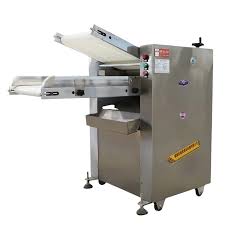 | 220 V Stainless Steel Dough Sheeter Pressing Machine 220 V Stainless Steel Dough Sheeter Pressing Machine Voltage 22O V Material Stainless Steel Capacity 350 kg/hour Power 100 kW Automation Grade Semi Automatic Usage/Application Bakery Product... View product → |