A machine’s advertised kilograms per hour rarely equals the food your team can serve during a peak period. By separating cutting speed from labour savings, queue time, cleaning and downstream bottlenecks, you can specify equipment that improves the whole preparation sequence rather than creating a faster pile of unfinished ingredients.
Key takeaways
- Measure peak-hour portions, kilograms per hour and queue times before buying.
- Match machine capacity to the actual task, batch size and service demand.
- Check electrical supply, ventilation, clearance, cleaning access and operator safeguards before installation.
- Test finished output, labour time and waste during commissioning, not just machine speed.
Define the speed your kitchen actually needs
A faster machine is useful only if it increases usable output during your busiest service period. Define faster food preparation as a measurable result: more finished portions, kilograms per hour, labour reduction, queue time reduction, fewer preparation stages, or more consistent output.
1. Record demand during the busiest 60–120 minutes. Note the kilograms or portions required, the preparation task, current processing time, staff assigned and the queue that forms before service.
2. Calculate the required rate by dividing peak demand by actual preparation minutes. Remove time for loading, unloading, changeovers, ingredient replenishment, cleaning and short operator pauses; a machine rated at 100 kilograms per hour will not deliver that rate across a working shift.
3. Time the complete task rather than one machine cycle. Include trimming, weighing, feeding, collecting, inspection and rework. Record the size, moisture, hardness and batch quantity of the food because these can reduce real throughput.
4. Set a target that protects quality. A shredder must produce usable shreds, a slicer consistent thickness, and a mixer a finished dough or batter; output that creates rejects or extra handling is not faster preparation.
Compare equipment against this baseline and state the result in the same units. If the target is 60 kilograms per hour for a two-hour peak, ask for demonstrated throughput under your ingredient and cut conditions, not the highest empty-machine figure.
Also decide whether the priority is capacity, labour reduction or queue time reduction before paying for surplus speed.
Match machine capacity to real demand and the right task
A peak-hour demand calculation must include product volume, available minutes, loading, unloading and cleaning. If you need 60 kg of sliced vegetables in 45 minutes, a machine rated at 80 kg per hour does not provide 60 kg of real throughput once operators change products and clear the feed chute.
Separate continuous versus batch capacity before comparing models. A continuous slicer suits repeated high-volume work, while a 20 kg mixer or pressure steamer may process more efficiently in measured batches. Combi ovens illustrate the same point: rack capacity and loading time often limit output more than the programmed cooking cycle.
| Task | Capacity to compare | What changes the result |
|---|---|---|
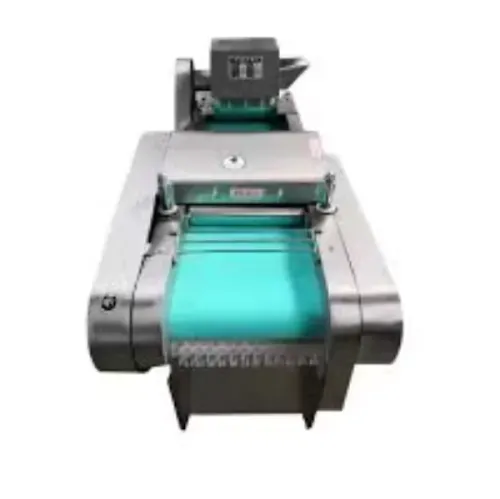
| Shredding, slicing or cutting | Finished kg per hour at your chosen cut size | Product hardness, moisture, feed size, blade changes and pauses |
| Pulverising | Batch weight and cycle time | Particle size, heat buildup, product density and cleaning between batches |
| Dough sheeting or pressing | Pieces or kg per hour at the required thickness | Dough temperature, hydration, sticking and manual repositioning |
| Mixing | Batch weight within the working range | Minimum load, dough stiffness, scraping and discharge time |
Choose automatic versus semi-automatic equipment according to labour and flow, not preference. Automatic feeding can reduce handling but creates a bottleneck if one operator cannot keep the hopper supplied; semi-automatic equipment may win when recipes, products or batch sizes change frequently.
Request a demonstration using your ingredients, target size and full batch, then record output after setup and sanitation time.
Check power, space, sanitation and operator safety before installation
A machine is suitable only when its electrical supply, footprint, cleaning route and operating controls fit the kitchen—not merely when its motor runs in a demonstration.
1. Have a qualified electrician verify the available voltage, frequency and phase before ordering. Confirm whether the machine needs single-phase and three-phase power, and match the specification to the site: 380 V equipment and 110 V equipment are not interchangeable.
Record current draw and isolator requirements, then provide a dedicated, correctly rated circuit with accessible isolation.
2. Mark the machine’s footprint on the floor, including door swing, service clearance, operator standing space and trolley routes. Leave enough room to remove panels, lift out blades or trays, drain fluids and clean behind the unit. A machine that blocks a fire exit or forces unsafe lifting is not an efficient installation.
3. Inspect the food-contact areas before acceptance. Look for smooth welds, sealed joints, removable guards and tool-free access to residue traps. Ask for certification to NSF/ANSI 4 or the sanitation standard required in your jurisdiction; an electrical safety listing does not prove cleanability or food-contact suitability.
4. Check heat, smoke and grease output with the kitchen designer. Induction removes combustion gases, but searing still produces vapour; appliances with grease-laden vapour may need a Type I exhaust hood and makeup air.
5. Test the loaded operating condition, not an empty cycle. For a rapid chiller, verify internal temperature using the intended pan depth, batch mass, loading density and probe position. Confirm guards, emergency stops, residual-current protection and a safe cleaning procedure before staff use the machine.
Build a faster end-to-end workflow, not an isolated fast step
Start with workflow sequencing, not the fastest individual appliance. Match every stage’s usable output—kilograms per hour, trays per cycle or orders per 15 minutes—so preparation does not outrun cooking, and cooking does not overwhelm chilling, holding or dispatch.
1. Size preparation equipment to the next stage’s intake. Release sliced, mixed or portioned food in batches that fill the cooking load without leaving ingredients exposed or operators waiting.
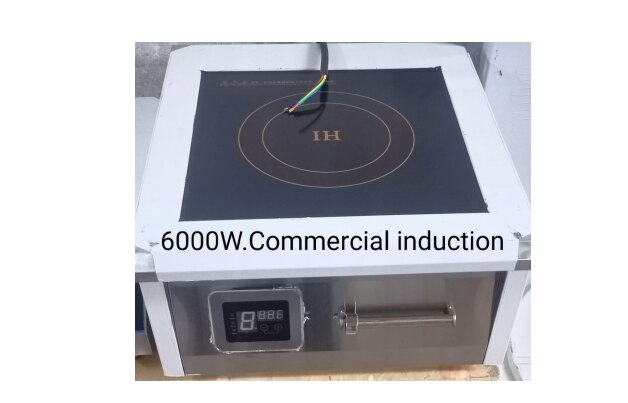
2. Assign each cooking method to the product. Use induction cooking for responsive pan work, a pressure steamer for repeatable moist-food batches, a combi oven for roast, steam, bake and rethermalization without moving pans, and a high-speed oven for small portions and rapid service.
Check rack capacity and loading time; a combi oven with a long loading queue is not fast in practice.
3. Transfer cooked food directly to the correct chilling equipment. Count usable trays and chilling time, not just the oven cycle. If the blast chiller cannot accept a full oven load, cooking becomes the bottleneck.
4. Separate food for immediate dispatch from food for holding. Keep hot time-temperature-control-for-safety food at 135°F (57°C) or above, but avoid extended holding because texture and moisture deteriorate.
5. Control microwave-assisted heating in a high-speed oven. Stir or rotate dense portions, allow standing time and check the coldest point with a thermometer; rapid heating does not guarantee uniform heating.
6. Stage containers, labels, utensils and delivery racks beside dispatch. The last handoff determines whether the faster upstream equipment reduces queue time or merely creates a pile of unfinished orders.
Compare total operating cost and prove performance at commissioning
A low purchase price can become expensive through energy use, labour, downtime and replacement parts. Request a quotation that separates equipment, delivery, installation, electrical work, consumables, planned maintenance and training. That gives you the total cost of ownership, not just the invoice total.
Before accepting the quotation, ask for:
- Rated input in kilowatts, expected output at your batch size, duty cycle, cleaning time and recovery time after loading.
- Warranty and after-sales service terms, including response time, technician location, spare-parts availability and the cost of parts outside warranty.
- Proof of food-equipment sanitation certification, such as NSF/ANSI 4 where applicable; an electrical safety listing alone does not prove cleanability or food-contact suitability.
- A commissioning throughput test using your product, batch weight, cut size and normal operator. Ask Lipsa Impex to record the result rather than relying on the nameplate capacity.
| Claim to verify | Evidence to request | Acceptance check |
|---|---|---|
| Output capacity | Kilograms per hour at your product and batch size | Weigh finished output over a timed run, including loading pauses |
| Cutting performance | Sample pieces from the intended blade, disc or setting | Check cut consistency, rejects and damaged product |
| Heating or cooking speed | Recovery time after a full cold load | Record product temperature, energy use and time to reach the target |
| Reliability | Demonstration under the planned duty cycle | Run repeated batches and inspect alarms, overheating and stoppages |
Reject equipment that meets a headline figure only under empty-chamber conditions. A slower machine with consistent output and dependable service can cost less to operate.
Related products
 | High Speed Food Shredder Capacity 500 kg/hr Application Cutting Material SS 304 Voltage 220 V Machine Power 3 HP Weight 200 Kg Product Description: Semi-automatic machine for... View product → |
 | 100 L Stainless Steel Cooking Machine 100 L Stainless Steel Cooking Machine Capacity 100 L Material Stainless Steel Weight 30 Kg Power 5000 W Voltage 220 V Usage/Application Food Processing Product Description: Large 100L... View product → |
Frequently asked questions
How do you define the speed a commercial kitchen actually needs?
Measure usable peak-period output using finished portions, kilograms per hour, labour time, queue time, preparation stages and consistency.
How do you match equipment capacity to real demand?
Compare the machine’s task, batch size and rated capacity with your busiest service period instead of choosing the fastest-looking model.
What should you check before installing electric kitchen equipment?
Confirm electrical load, socket and circuit requirements, available space, sanitation access, ventilation, clearances and operator safety features.
How can a kitchen build a faster end-to-end workflow?
Remove bottlenecks between receiving, storage, preparation, cooking, holding and service rather than speeding up one isolated step.
How do you prove equipment performance after installation?
Record output, preparation time, labour use, waste, consistency and cleaning time during commissioning under normal peak-service conditions.
Related products
 | 220 V Stainless Steel Vegetable Cutter Machine 220 V Stainless Steel Vegetable Cutter Machine Vegetable Cutting Capacity 800 kg/hr Usage/Application Vegetable Slicer Machine Cutting Shapes Slice Shape Material Stainless Steel Voltage Supply... View product → |
 | 300kg Electric Automatic Vegetable Cutter EQ 450 300kg Electric Automatic Vegetable Cutter EQ 450 Capacity 1000 kg Material Stainless Steel Motor 3 Kw Voltage 220 V Weight 150 Kg Automation Grade Automatic Product Description: 1000 kg cutting... View product → |
 | 380 V Commercial French Fry Cutting Machine 380 V Commercial French Fry Cutting Machine Usage/Application Commercial Material Stainless Steel Type of Cutter French Fry Cutter Weight 110 Kg Voltage 380 V Capacity 600 Kg/h Product... View product → |
 | Food Processing Machine Bowl Capacity 20 L Main Body Material SS Weight 95 Kg Voltage 220 V Application Industrial Machine Power 1 HP Product Description: 20L stainless... View product → |