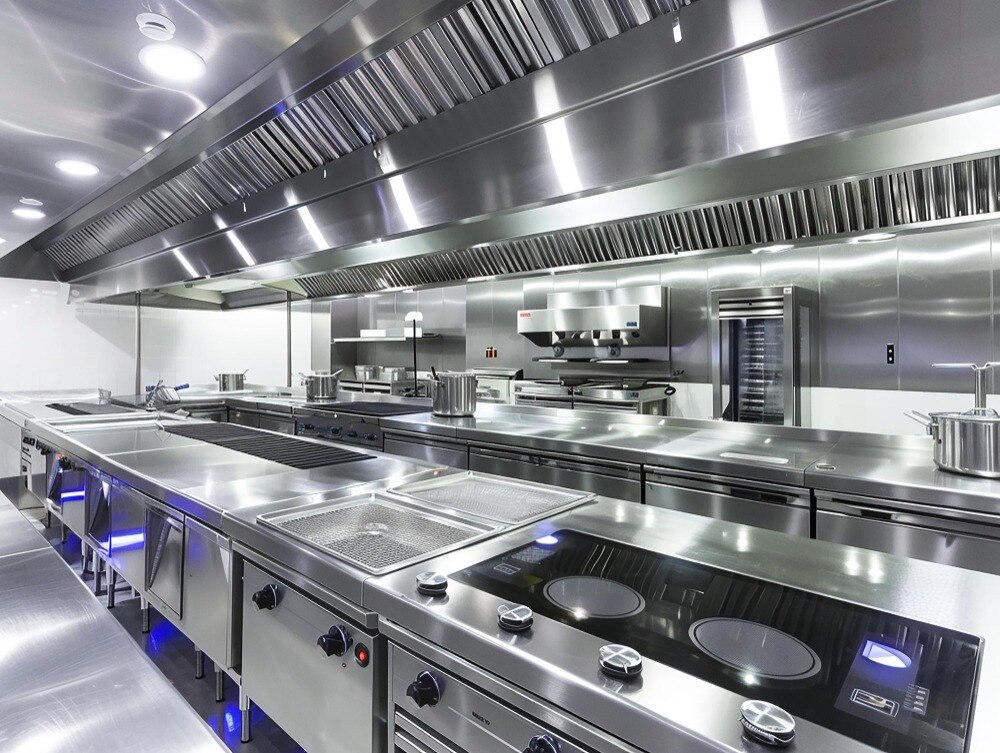
A professional kitchen needs more than a collection of appliances: every item must support a movement of food from receiving to service while meeting space, temperature, sanitation and utility demands. By the end, you will be able to build a workflow-based equipment list, size each item against peak demand and identify the installation details that belong in a supplier’s quotation.
Key takeaways
- Separate raw and cooked work areas to prevent cross-contamination.
- Size equipment from peak covers, batch volume and available utilities.
- Specify refrigeration by capacity, temperature control and service access.
- Require installation checks, operator training and sanitation documentation.
What equipment does a professional kitchen need at each workflow stage?
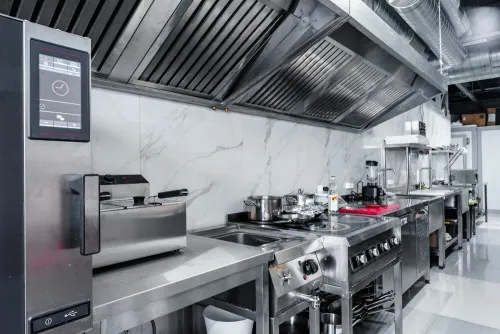
Build the professional kitchen equipment checklist around food flow: receiving, cold storage, preparation, cooking, plating, service and cleaning. Mark separate raw and cooked work areas, and route waste out without crossing the plating path.
1. Receiving needs a delivery inspection area, weighing scale, storage bins and shelving. Add restaurant storage racks and a mobile trolley where moving goods through the kitchen would create cross-traffic.
2. Cold storage needs refrigerators, freezers and temperature monitoring. Hold potentially hazardous food at 41°F (5°C) or below, using probes accurate to within 2°F (1°C).
3. Preparation needs stainless-steel worktables, separate sinks, cutting tools, mixers, cutters and food processors. Place extra worktables or trolleys so raw preparation never crosses the cooked-food route.
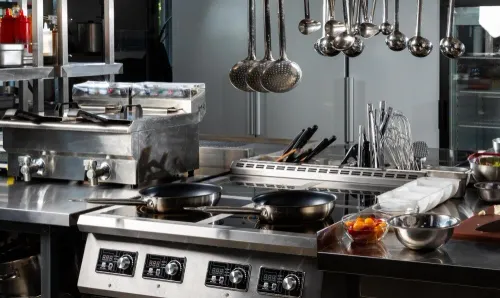
4. The cooking line may include cooking ranges, ovens, combi ovens, fryers, griddles, charbroilers and woks. Grease-producing appliances require a Type I grease hood, not a Type II heat-and-steam hood.
5. Plating and service need pass counters, heat lamps, hot-holding equipment, service shelving and suitable display refrigeration. Keep the pass clear of incoming deliveries and outgoing waste.
6. Cleaning needs separate handwashing and warewashing sinks, a commercial dishwasher, pre-rinse equipment, drainboards, drying racks and waste bins. Include grease-waste handling and enough drying space for the dishwasher’s rack volume.
7. Record food-contact standards with the equipment schedule: NSF/ANSI 2 for food equipment, NSF/ANSI 4 for commercial cooking equipment and NSF/ANSI 7 for commercial refrigerators and freezers.
How should you size and compare restaurant kitchen equipment?
Size equipment around covers per hour and peak-hour demand, not the largest capacity printed on the machine. Start with menu mix, batch size and holding time.
Calculate the portions from one batch, the time required per batch, the number of batches possible before service and how much product can safely wait in hot or cold holding. Oversizing wastes capital and space; undersizing creates queues or unsafe holding.
Use these checks before comparing models:
- A batch fryer or mixer gives control over each run and simpler cleaning. Continuous equipment suits a steady, repetitive volume.
- Compare manual tools with powered machines by counting labour minutes, portion consistency and cleaning time.
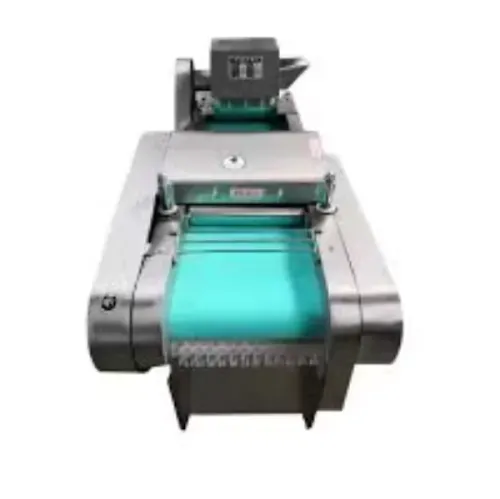
- A vegetable cutter suits repeated uniform slicing. A shredder handles high-volume cabbage, carrot or cheese, but damages delicate produce.
- A planetary mixer handles doughs, batters, creams and fillings. A dough sheeter suits dough rolled to controlled thickness, not sticky, highly hydrated or heavily aerated mixtures.
| Option | Main advantage | Best fit or limitation |
|---|---|---|
| Batch equipment | Control and simpler cleaning | Variable menus and measured production |
| Continuous equipment | Steady high-volume output | Repetitive demand without frequent changeovers |
| Single-purpose appliance | Faster performance | One task repeated throughout service |
| Multipurpose machine | Lower footprint and capital | Menus that change frequently |
A single-purpose appliance can outperform a multipurpose machine on speed, but the multipurpose option preserves space and capital when production changes. Select the smallest machine that meets the calculated peak requirement while leaving enough capacity for recovery between batches, rather than paying for idle capacity all day.
Which cooking appliances and utility systems belong in the cooking line?
Choose commercial cooking ranges, ovens, fryers, grills and a combi oven from the menu’s heat profile, not the largest capacity in a catalogue. A breakfast line has different duty from a wok-heavy menu or a bake-and-hold operation. Combi oven requirements include treated water, a drain, adequate gas or electrical capacity, ventilation and service access.
Hard water scales steam components and increases cleaning.
- Grease-producing fryers, griddles, charbroilers and woks generally need a Type I grease hood with compliant fire suppression. A Type II hood for heat or steam cannot replace it.
- Size commercial kitchen ventilation as a system: appliance duty, plume behaviour, capture and containment, replacement air and building air balance all affect performance. Excessive or badly directed makeup air can push smoke and grease beyond the hood.
- Record each appliance’s voltage, phase, amperage, plug or hardwire connection, gas type and pressure, water and drain sizes, ventilation duty and required clearances.
- Plan condenser heat, room ventilation and service access in a hot kitchen; voltage and wattage alone do not describe the installation.
| Appliance | Heat profile | Infrastructure watchpoint |
|---|---|---|
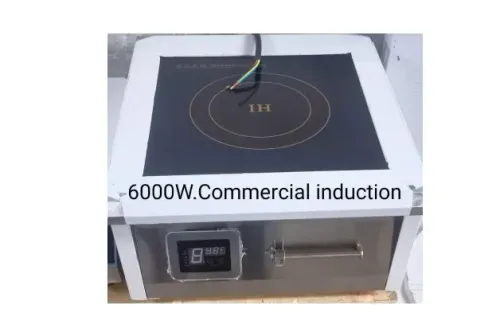
| Commercial range | Direct, flexible pan cooking | Gas pressure or electrical load, hood duty and side clearances |
| Fryer or griddle | High grease output | Type I hood, fire suppression, oil service space and heat clearance |
| Combi oven | Convection, steam and mixed cooking | Filtration, drain capacity, utilities, ventilation and maintenance access |
How do you specify refrigeration, prep stations and food-production machines?
Specify refrigeration and preparation as one operating system, not as isolated products. Compare usable refrigerator capacity with gross capacity, then check whether loading patterns and door-opening frequency support the required stock.
Hold potentially hazardous food at 41°F (5°C) or below, and confirm door swing, aisle clearance, condenser clearance, ventilation and performance at Nagpur’s ambient kitchen temperature.
| Equipment | Best use | Critical check |
|---|---|---|
| Refrigerator | Daily chilled holding | Product load, door openings and usable shelf space |
| Commercial freezer | Frozen storage | Recovery time, clearance and energy data |
| Display refrigerator | Front-of-house merchandising | Traffic exposure and wasted storage volume |
| Blast chiller | Rapid cook-chill production | Pan configuration and cooling capacity |
A display refrigerator can merchandise food effectively but wastes back-of-house volume and exposes products to customer and staff traffic. For cook-chill, remember blast chiller versus refrigerator: cool cooked food from 135°F to 70°F within 2 hours, then to 41°F or below within 6 hours total under the FDA Food Code procedure.
Check whether a 301 L prep table has enough usable pan, shelf and container space for the service line; its footprint must still preserve aisle clearance. Match the mixer, cutter, shredder and sheeter to batch size, menu texture and labour time rather than headline capacity.
Lipsa Impex can add practical value by mapping those machines and refrigeration units to your menu, loading pattern and service sequence before you approve a quotation.
Related products
 | 301 L Stainless Steel Pizza Prep Table 301 L Stainless Steel Pizza Prep Table Usage/Application Display Salad No. Of Shelves Swing Door Voltage 220 V Color Silver Material Stainless Steel Capacity 301 L Product Description:... View product → |
 | PLANETARY MIXTURE ₹75000 High-Performance Industrial Planetary Mixers From boutique bakeries to high-volume production lines, our range of professional planetary mixers (10L... View product → |
What should a supplier include for warewashing, sanitation and commissioning?
Size commercial dishwasher capacity from the entire warewashing process, not its racks-per-hour figure. Specify scraping, pre-rinse, rack dimensions, final-rinse or chemical-sanitising method, drainboards, drying space and ventilation; a fast machine still creates a bottleneck if racks cannot be unloaded or dishes cannot dry.
A chemical-sanitising dishwasher requires the correct chemical-feed setup, service support and test kits. Check concentration when a container empties, a pickup tube blocks, dosing changes, water temperature falls or soil carries over. Include these commissioning items:
- Separate warewashing sinks, handwash stations, grease-handling equipment and washable waste bins.
- A refuse route that leaves food preparation and plating areas without crossing them.
- Calibrated probes accurate within 2°F (1°C), sanitizer test strips, water filtration, pressure regulators and drain pans.
- Adjustable legs, shelving, casters, ventilation interlocks and spare spray arms, gaskets and other wear parts.
- Ice machine installation with a potable-water connection, cleanable food-contact surfaces, drain, heat-rejection clearance and service access.
| Sanitation method | Specify | Failure to prevent |
|---|---|---|
| Machine final rinse | Required water temperature, booster capacity and verification method | Inadequate heat or contact |
| Chemical sanitising dishwasher | Sanitizer, dosing equipment, test kit, concentration and contact-time checks | Unsafe concentration after supply or pump faults |
| Manual sink sanitising | Chemical, water temperature, concentration and contact-time instructions | Dishes removed before sanitizing |
Ask which sanitation standard applies locally and whether food-contact equipment meets the buyer’s required NSF/ANSI standards: NSF/ANSI 2 for food equipment, NSF/ANSI 4 for commercial cooking equipment and NSF/ANSI 7 for commercial refrigerators and freezers. Record drains, energy data, ventilation, service clearance and commissioning tests.
Frequently asked questions
What equipment does a professional kitchen need at each workflow stage?
Map equipment to food flow: receiving needs inspection space and weighing equipment; storage needs refrigerators, freezers and dry shelving; preparation needs sinks, worktables and cutting equipment; cooking needs the cooking line and ventilation; plating needs pass counters and holding equipment; service needs transport and dispensing equipment; cleaning needs warewashers, sinks, racks and waste routes. Keep raw and cooked work areas separate.
How should you size and compare restaurant kitchen equipment?
Start with peak covers, menu volume, batch size and service duration. Compare usable capacity, footprint, electrical load, gas requirement, water connection, extraction needs, cleaning time, warranty coverage and access for maintenance. Check that doors, aisles and delivery routes can accommodate the equipment before ordering.
Which cooking appliances and utility systems belong in the cooking line?
Match appliances to the menu rather than buying a generic line. A cooking line can include ranges, induction hobs, griddles, fryers, charbroilers, combi ovens, convection ovens, salamanders, hot holding units and refrigeration under counters. Specify exhaust hoods, make-up air, grease filtration, fire suppression, gas isolation, electrical protection, drainage and hot-water capacity with the line.
How do you specify refrigeration, prep stations and food-production machines?
Define the required temperature zones, internal volume, shelf or rack format, door configuration and cleaning access for each refrigerator or freezer. Specify prep stations by workflow, work-surface material, sink position and raw-versus-cooked use. For mixers, slicers, processors and other machines, confirm batch capacity, safety interlocks, removable parts, power supply and available replacement components.
What should a supplier include for warewashing, sanitation and commissioning?
Request a dishwashing layout with pre-rinse, wash, rinse, sanitising and drying stages, plus clean and dirty rack separation. Confirm handwash sinks, chemical storage, floor drains, waste handling and cleaning tools. During commissioning, require utility checks, temperature and leak tests, ventilation verification, equipment manuals, warranty documents, operator training and a signed handover list.
Related products
 | 100 L Stainless Steel Cooking Machine 100 L Stainless Steel Cooking Machine Capacity 100 L Material Stainless Steel Weight 30 Kg Power 5000 W Voltage 220 V Usage/Application Food Processing Product Description: Large 100L... View product → |
 | High Speed Food Shredder Capacity 500 kg/hr Application Cutting Material SS 304 Voltage 220 V Machine Power 3 HP Weight 200 Kg Product Description: Semi-automatic machine for... View product → |
 | 220 V Stainless Steal Commercial Display Refrigerator 220 V Stainless Steal Commercial Display Refrigerator Material Stainless Steel Usage/Application Commercial Color Grey Voltage 220 V Power 280 W Capacity 460 L Product Description: 460L storage ideal for... View product → |
 | 110 V Stainless Steal Dough Sheeter Roller Machine 110 V Stainless Steal Dough Sheeter Roller Machine Voltage 110 V Material Stainless Steel Capacity 700 kg/h Usage/Application Bakery Automation Grade Automatic Power 0.75 kW Product Description: 700... View product → |