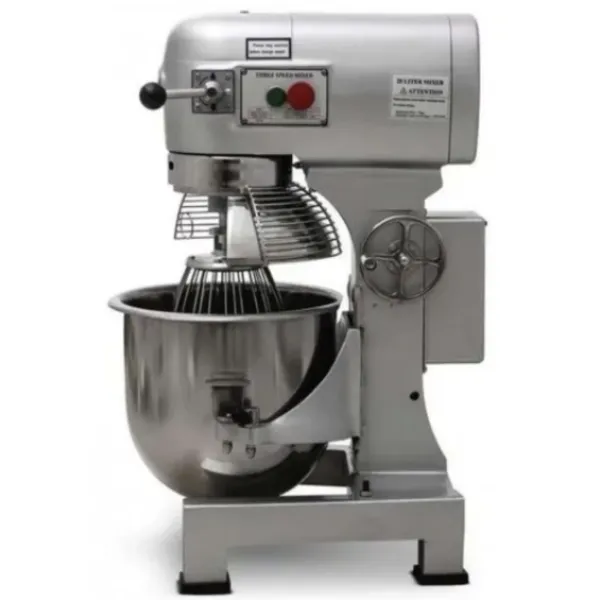
A planetary mixer is commonly associated with bakeries, but its usefulness can extend to several commercial food-production tasks. Its mixing action allows ingredients to be blended, whipped or worked using different attachments, making it a versatile option for kitchens producing multiple recipes.
A Commercial Planetary Mixer can therefore be useful for bakeries, cafés, hotels, restaurants, cloud kitchens and food-production units looking for flexible mixing equipment.
What Makes Planetary Mixing Different
In a planetary mixing arrangement, the attachment rotates while moving around the mixing bowl. This movement helps the tool reach different areas of the bowl and creates a thorough mixing pattern.
Depending on the machine and attachment, applications may include:
- Cake batter preparation
- Cream whipping
- Icing and frosting
- Cookie mixtures
- Light dough preparation
- Dessert fillings
- Sauces and selected food mixtures
Not every mixer should be used for every application. Dough density, batch weight and operating duration can place very different loads on the motor and transmission.
Choose Attachments According to the Recipe
A whisk, beater and dough hook perform different jobs.
Whisks are generally suited to aerating lighter preparations such as cream or egg-based mixtures. Beaters can handle many general mixing applications, while dough hooks are intended for suitable dough preparation within the machine's rated capability.
Before purchasing a Commercial Planetary Mixer, buyers should identify the recipes they prepare most frequently rather than assuming one attachment will handle everything.
Bowl Capacity Needs Practical Evaluation
A stated bowl capacity does not necessarily mean every recipe can be processed at that maximum volume. Heavy mixtures can require considerably more power than light whipped preparations.
Commercial bakeries and kitchens in Nagpur should discuss both bowl capacity and actual product load when evaluating equipment.
Important questions include:
- What ingredients will be mixed?
- How heavy is a normal batch?
- How many batches run each day?
- Which attachments are required?
- How frequently will the mixer operate?
These details provide a more realistic basis for machine selection.
A Versatile Mixer Still Needs Proper Operating Practices
Overloading can affect mixing quality and put unnecessary stress on mechanical components. Operators should follow recommended capacities and keep mixing tools, bowls and contact surfaces properly cleaned.
Lipsa Impex supplies food-processing and commercial kitchen machinery in Nagpur, Maharashtra, including equipment for businesses moving from manual preparation toward mechanised production.
The main advantage of a planetary mixer is flexibility. When the machine's capacity, attachments and operating specifications match the recipes being produced, one mixer can support several preparation processes without requiring separate equipment for every basic mixing task.
Keywords